

Image: https://pixabay.com/illustrations/ai-generated-augmented-reality-8445846/
What is 3D Understanding?
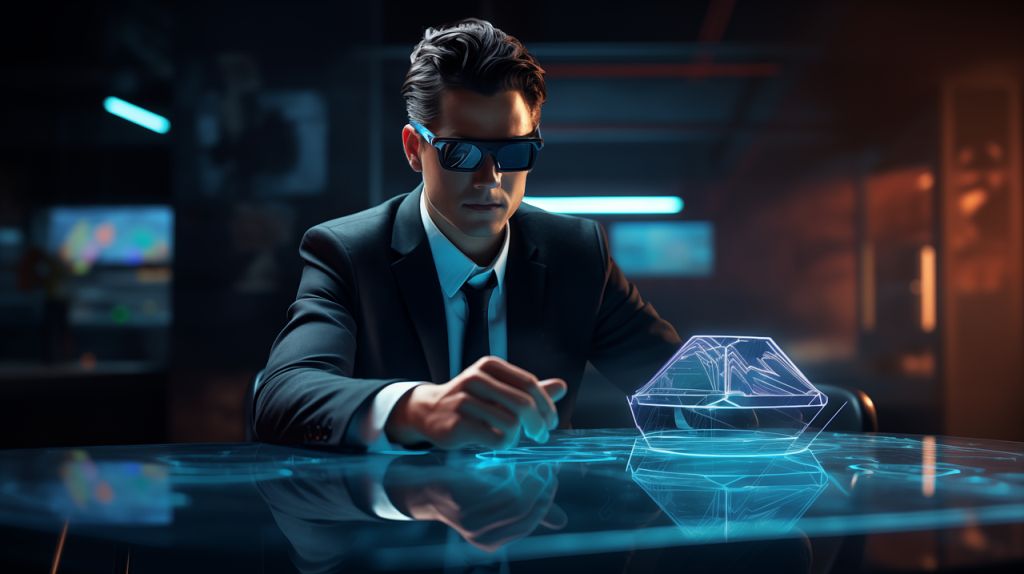
3D understanding goes far beyond presenting a shiny model on display that rotates on screen. It involves perceiving and interpreting spatial information in its original three-dimensional setting.
It is about understanding the relationships and interdependencies between objects as they exist in the real world. This is facilitated through techniques such as Virtual Reality (VR), Augmented Reality (AR), and detailed Digital Twins, which are virtual representations of their physical counterparts.
In recent years, VR and AR have brought about a revolution by transforming different industries through new opportunities for experiencing and interacting with products, services, and environments.
3D visualization is the generation of three-dimensional images or animations that help different industries communicate their ideas in a better way. It has become an essential tool. The power of 3D visualization and immersive data is being experienced across industries, including manufacturing industries, retail, education and healthcare, automobiles, interior design and architecture, gaming and entertainment.
New Possibilities in Medical Training & Patient Care
Virtual Reality for Medical Training has emerged as an indispensable medical training tool. Through VR, medical students and professionals might engage in the teaching of surgical intricacies by replicating real-life scenarios. They can practice complex procedures in a risk-free environment. The power of immersive data visualization helps build confidence in medical trainees while sharpening their skills. Hence, AR/VR technologies are becoming popular among medical institutions and hospitals for training purposes.
Similarly, AR for surgical procedures is revolutionizing operating theatres. A surgeon can project a digital image onto the patient’s body and get real-time support. This enhances the surgeon’s precision, especially during minimally invasive surgeries where 100% accuracy is mandatory.
Seeking remote consultations has become quite common. Augmented Reality lets patients share real-time data and visuals with specialists from anywhere in the world. This immersive technology helps doctors to evaluate patients in a virtual space and make more accurate decisions. The technology facilitates access to remote healthcare and a multitude of experts.
AR/VR in Education – Transforming Student Learning Processes
The integration of 3D data visualization in educational experiences has helped learning to be more interactive, engaging, and effective. VR and Extended Reality (XR) allow students to enjoy a learning experience that goes much beyond a traditional classroom environment. It provides students with opportunities like a stroll along the ocean floor, taking a tour of their favorite historical sites, or even exploring outer space. Engaging in such awesome experiences would not have been possible or easily accessible without immersive technology. Visual and interactive learning further helps students to grasp difficult concepts fast.
3D visual representations are also an excellent way to help students with special needs. This simulated environment can craft various educational settings to suit each child so that they can study at their own pace. AR resources give equal opportunity to these students to facilitate navigation, visual and auditory support, and social interaction.
The Satisfaction of 3D Shopping Experience
Imagine walking into a virtual store from the comfort of your home, selecting some products, and even trying them on before actually making the purchase! The virtual “try-before-you-buy” phrase is now synonymous with most retail brands. The experimentation ranges from placing furniture in your home to seeing how a certain pair of glasses or makeup would look on you. For example, the renowned eyewear company “Lenskart” uses AR to help customers select a product that best suits their face. You can try on innumerable options without having to visit the store. Similarly, the garment and shoe companies are giving precise product information on body or shoe sizes through measurement means using AR.
The Power of 3D Visualization in Interior Design & Architecture
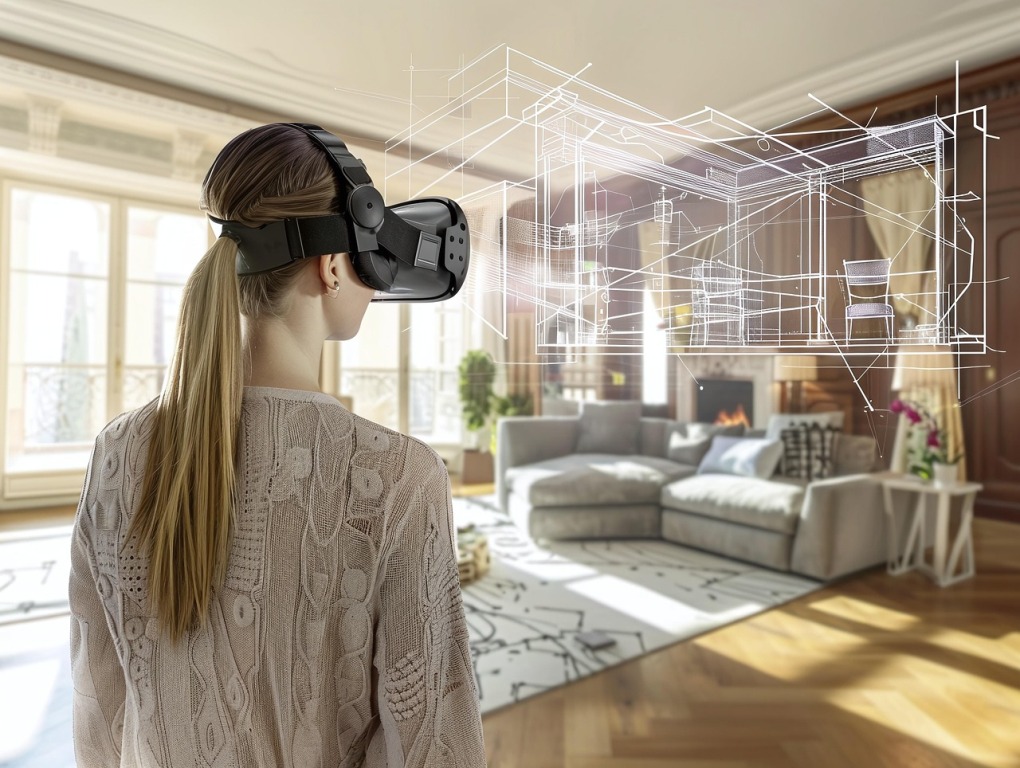
Image: https://pixabay.com/illustrations/ai-generated-interior-designer-8894561/
3D visualization has revolutionized itself in the domains of interior design and architecture. With the help of three-dimensional modeling, a designer can display space pictures to a client before any real modifications take place. Occasionally, discrepancies may exist when interior designers try to communicate ideas verbally or through 2D sketches. 3D visualization puts designers in a position where they can clearly portray their ideas and help clients grasp the whole concept.
Virtual Property Tours – A Boon for the Real Estate Industry
VR has revolutionized the path for prospective buyers and sellers. They can now view homes and apartments via virtual walkthroughs. This has proven to be especially beneficial for international clients or people searching for property in remote locations. It is now possible for them to obtain a comprehensive view of the property without having to travel. This feature has made real estate more accessible and cost-effective.
Virtual Prototyping and Design – Groundbreaking Technology in Manufacturing
Considered one of the most evolutionary uses of VR in manufacturing, engineers and designers can now simulate and review a virtual prototype of a product before its physical production. Traditional prototyping involved numerous iterations of the actual product. Companies incurred high costs for materials and a lot of labor-intensive work. Virtual Reality has disrupted this with a method through which manufacturers can now build highly complex virtual prototypes that can be tested and refined faster without physical constraints.
Take the example of famous automobile and aero-design companies like Ford and Boeing, who have promoted VR prototyping, leading to massive improvements in design timelines. By providing immersive 3D environments, engineers can manipulate complex designs in real-time; this reduces the time taken to progress from design to prototype by as much as 60%. With this method, there is zero wastage of material, probable delays in production are minimized, and the overall development cost is reduced.
Immersive Travel Experience with VR
As 3D visualization technology continues to evolve, VR has created a highly immersive experience for famous travel spots, museums, landmarks, and cultural sites. It is a preview for prospective travelers to preview their preferred destinations ahead and enhance their travel plans. Training for the travel industry can also tie VR for other benefits: like flight attendants, hotel staff, and tour guides.
VR – A Great Impact on the Gaming Industry
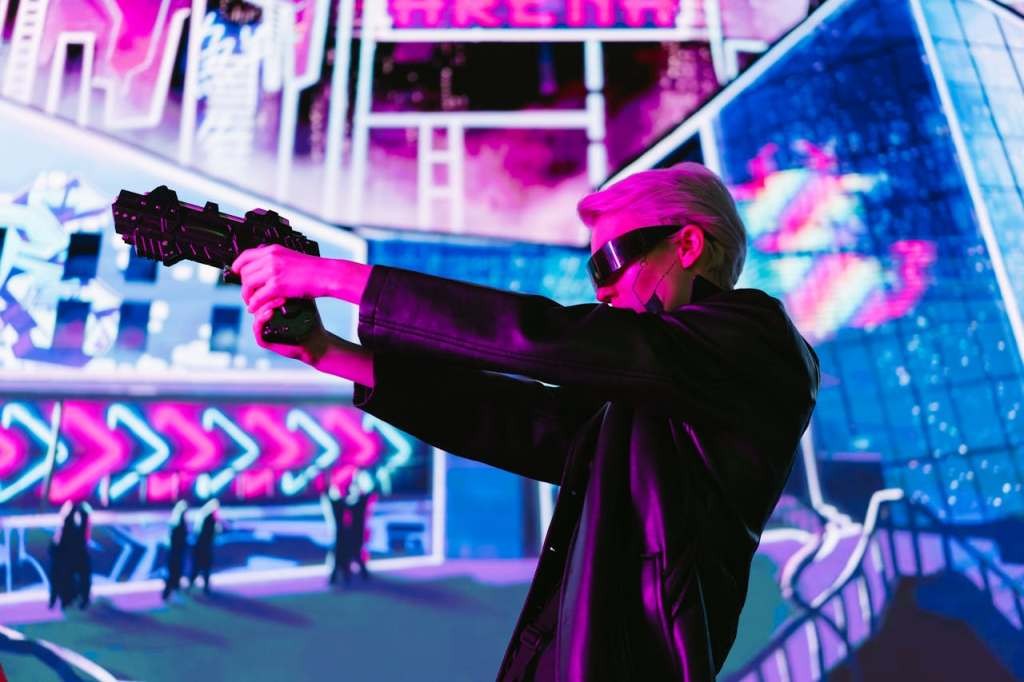
Image: https://www.pexels.com/photo/woman-in-black-coat-holding-black-gun-8108089/
The possibilities provided by VR to the gaming industry have never been imagined before by game developers. Games that were once bound to conventionally packaged screens can now turn into real immersive experiences. VR manages to absorb the user completely in a digitally fabricated world through the intervention of a headset. By using hand-held controllers, users can choose to interact with objects and the environment.
Conclusion
3D understanding and immersive data visualization are fundamentally changing how we interact with information and how we make decisions. Interactive and highly-realistic virtual environments conjured by technologies like VR and AR are not just improving efficiency and reducing costs, they’re also creating entirely new possibilities across diverse industries—from revolutionizing medical training and transforming educational experiences to augmenting retail, real estate, and manufacturing. As these technologies continue to advance, their role in shaping our future will only become more prevalent; empowering us with deeper insights for enhanced decision making.

Chris Mcdonald has been the lead news writer at complete connection. His passion for helping people in all aspects of online marketing flows through in the expert industry coverage he provides. Chris is also an author of tech blog Area19delegate. He likes spending his time with family, studying martial arts and plucking fat bass guitar strings.