

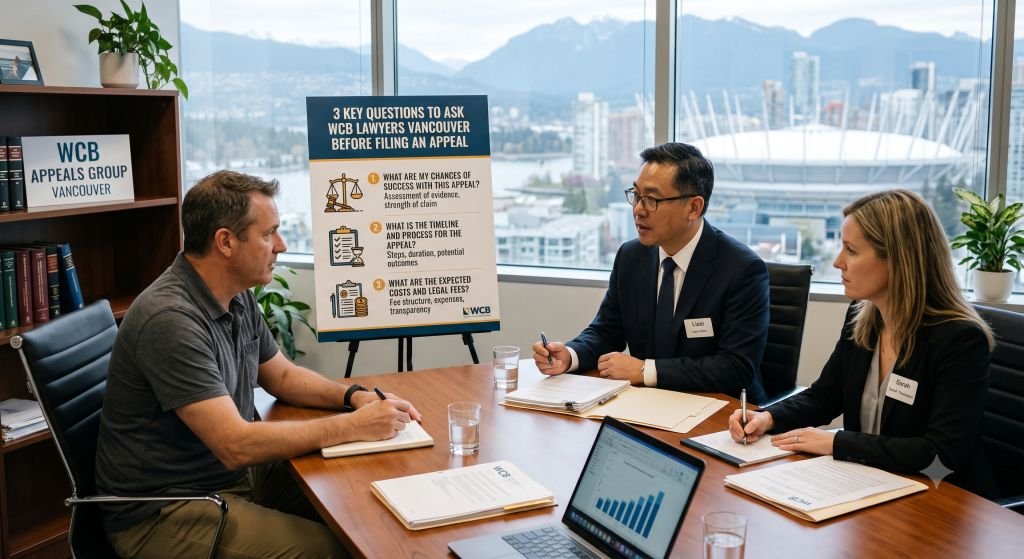
Filing an appeal against a workers’ compensation decision is not something to approach casually. The process has deadlines, specific decision types and evidentiary requirements. Before hiring representation, a worker should understand what the lawyer believes is wrong with the decision and how the case will be advanced.
If you are considering WCB lawyers Vancouver, asking the right questions at the initial consultation can help determine whether the lawyer is suited to the dispute.
What Exactly Is the Strongest Ground for Challenging the Decision?
A good lawyer should be able to identify the central issue in the case. That does not mean promising victory. It means explaining whether the potential challenge concerns medical evidence, the interpretation of the workplace incident, the extent of disability, entitlement to benefits or another issue.
WorkSafeBC’s Review Division can review many compensation and rehabilitation decisions, and official guidance indicates that a decision may be changed where the law or policies were not correctly applied, evidence was not properly weighed or significant new evidence supports a different result.
Ask the lawyer to explain which of these principles, if any, appears relevant to your circumstances. If the answer is vague, ask for examples from your actual decision letter rather than general statements about workers’ compensation. The lawyer should be able to explain what part of the decision is being challenged and why the available evidence provides a reasonable basis for doing so.
What Evidence Is Missing or Needs Strengthening?
The second important question is about evidence. A lawyer should review the available documentation and identify gaps. Depending on the case, that could include medical records, employment information, witness evidence, accident reports or documentation concerning functional limitations.
Ask specifically: which evidence already supports the case? what evidence is weak? what additional records should be obtained? and are medical opinions likely to be important? This conversation can reveal whether the lawyer has actually analyzed the case or is simply offering a generic explanation of the appeal process.
It can also prevent unrealistic expectations. If the existing evidence has significant weaknesses, an experienced lawyer should explain those weaknesses rather than promising an easy result.
What Deadline and Appeal Route Applies to My Decision?
Do not leave this question until later. WorkSafeBC currently states that most compensation and assessment review requests must be submitted within 90 days of the decision. Certain health and safety matters have a 45-day deadline.
If a Review Division decision is being appealed to WCAT, the general deadline is 30 days from the date of the Review Division decision. Some decisions follow different procedures, including certain matters that can go directly to WCAT.
Ask the lawyer to identify the exact deadline that applies to your case and what needs to be filed. A competent representative should be able to explain the procedural stage clearly rather than simply saying that an appeal can be filed.
It is also worth asking what happens if the deadline has already passed. Some circumstances may allow an extension, but a worker should not assume that an extension is automatic.
In Conclusion…
The first consultation should give you a clearer understanding of your case, not just a sales pitch. Ask what the strongest legal issue is, what evidence needs improvement and which deadline and appeal route applies. The answers can help you decide whether the lawyer has the experience and strategy necessary to handle the dispute.

Chris Mcdonald has been the lead news writer at complete connection. His passion for helping people in all aspects of online marketing flows through in the expert industry coverage he provides. Chris is also an author of tech blog Area19delegate. He likes spending his time with family, studying martial arts and plucking fat bass guitar strings.