

If you’re a founder, there’s one thing you can’t afford to overlook making sure you’ve got your intellectual property risks covered. Mess that up, and you risk losing the most important thing your business owns before you even get a shot at real customers. For most startups, IP holds more value than any computer or office lease.
Yet, founders keep falling into the same traps. Missed paperwork, unclear ownership, or just plain not understanding what intellectual property risk actually means. This opens you up to all kinds of nasty surprises: competitors copying your secrets, losing the right to your own name, paying through the nose to defend against infringement claims, or discovering you can’t even use your brand. In short, not being on top of IP can tank your growth and cut your exit story short.
So let’s get real—this guide walks you through what a thorough IP risk assessment looks like for startup founders in 2026. Here’s how to protect what you’ve built.
What Is IP Risk for Startups, Really?
Intellectual property risk isn’t just about someone stealing your ideas. It’s the whole landscape of threats to patents, trademarks, copyrights, and trade secrets. If you’re not careful, you could lose money, damage your reputation, and end up pinned down by competitors with stronger IP game.
Here’s what you’re up against:
• Infringement: Accidentally using something patented or copyrighted by someone else can drag you into expensive lawsuits.
• Theft: Others might just take your IP without asking, slicing into your revenue.
• Loss of Protection: If you don’t secure your protections, competitors can copy what makes your business special.
• Non-compliance: Break IP laws or skip a regulation, and now you’re paying legal fees.
• Tech Transfer Fumble: Partners or employees walk away with your tech you lose control.
And it gets messier. Different countries, inconsistent enforcement, and complicated rules make it harder to keep your IP safe as you scale.
AI is shaking up the world of intellectual property, especially for startups and companies hopping on the bandwagon. If you’re using AI tools, it’s crucial to lay out clear ownership rules, keep your confidential info safe, and really get to grips with how licensing works.
Here’s what you need to focus on:
- Who owns AI-generated content—make this crystal clear.
- How your employees use AI tools; you can’t just leave it up to chance.
- Safeguarding company secrets from slipping out through AI projects.
- Staying alert to third-party copyright risks. It’s easy to overlook, but it could cost you.
Why You Need to Assess IP Risk—Especially Now
IP risk assessment isn’t just some dry legal checklist. It’s your defense strategy. Investors care about who actually owns the assets behind your business. Nail your IP, and you’re a safer bet for funding and easier to acquire. Screw it up, and seed rounds, deals, or exits get harder—or disappear completely.
Litigation isn’t just expensive—it’s distracting and can last years. And because the U.S. works on a first-to-file basis, you have to move early or someone else will. File late, and you lose.
What Happens If You Ignore IP Risks
Numbers don’t lie. In India alone, IP right infringement costs businesses over ₹70,000 crores a year. Trademark fights keep climbing, and more than half of companies only see IP problems when it’s already too late. Most IP theft never comes to light until after the damage is done.
Losing a patent case can lead to product bans or forced redesigns. The costs pile up just applying for patents or trademarks is expensive, never mind fighting in court. Then you’ve got to wrestle with slow registration, complicated laws across borders, and keeping up as you expand internationally.
Where Startups Slip Up with IP
You need to pay close attention to these six risk zones. Startups drop the ball here all the time.
1. IP Ownership Gaps
Not documenting who owns what is a nightmare waiting to happen. Early-stage founders build apps or brands pre-incorporation, then forget to hand over the rights to the company. Unless you put everything in writing, that IP belongs to whoever created it not your startup.
Same goes for contractors or freelancers. Unless you sign an assignment agreement, they keep ownership. Investors notice these gaps fast and won’t write checks without proof you actually own what you say you own.
2. Patent and Prior Art
You can’t enforce a patent until it’s granted no power, and no recourse. Go too broad and your claim gets thrown out for prior art. Keep it narrow, and competitors can work around you.
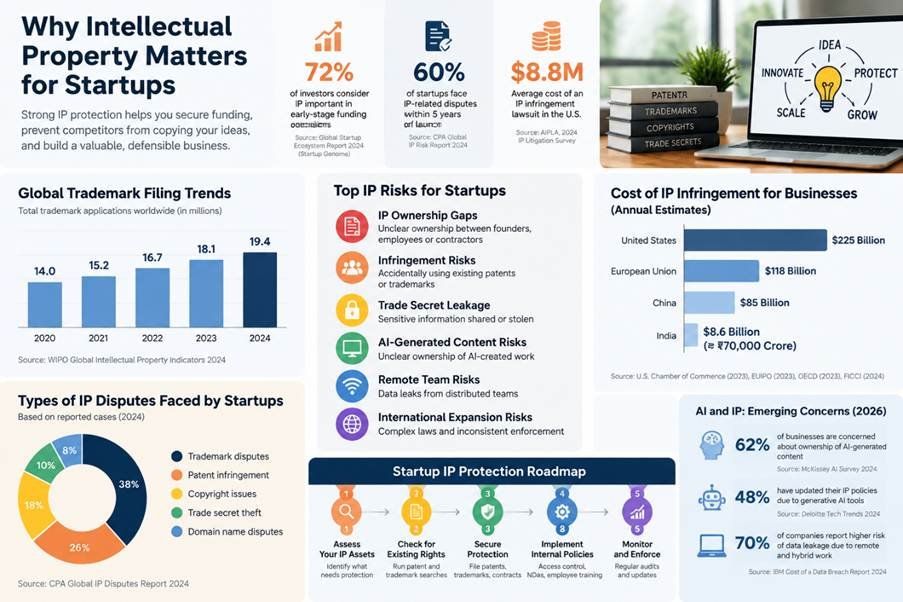
3. Trademark and Brand Issues
Trademark conflicts aren’t fun to discover after you’ve already launched. The USPTO checks for conflicts after filing, and any confusing similarities even in sound or meaning can shut you down or lock you out of your brand. Always check before you file.
4. Copyright Confusion
Copyright automatically applies when you fix something in a tangible form—no registration needed. But unless you get written assignments from everyone involved, a rogue founder or angry ex-employee could claim they own the code, content, or designs.
5. Trade Secret Leaks
Trade secrets only work if you’re serious about keeping things quiet. Remote work has made leaks more common—think employees using home Wi-Fi or personal laptops. Once a secret’s out, you’re out of luck.
6. Third-Party IP Infringement
Even if you independently created your tech, it doesn’t protect you from infringing on someone else’s patent. You’re responsible for making sure you’re not stepping on toes.
How to Run an IP Risk Assessment: Six Steps that Count
Let’s get practical. Here’s what it really takes:
1. Audit Your IP Inventory
List out every patent, application, trademark, domain name, copyright, software, design, trade secret—you name it. For each asset, link it to the right product or service, record the official owner, registration, status, and deadlines. Spot anything owned by someone outside your company—get it fixed.
2. Review All Ownership Docs
Track each asset from its original creator through all assignments or transfers. Just forming a company doesn’t mean old IP is included. Check if agreements are signed and were executed before or after the work was made.
3. Search for Conflicting Rights
Look for names or marks that are confusingly similar or already registered. This means searching trademarks, state databases, domains, and the basic web. For patents, do a solid check in every region you plan to operate.
4. Check Employee and Contractor Agreements
Collect confidentiality and invention assignment agreements for everyone—past or present. Make sure the paperwork actually matches your local law and covers the right dates.
5. Evaluate Your Freedom to Operate (FTO)
Don’t launch blindly FTO analysis tells you if you’re legally clear to go to market without infringing others’ patents. Yes, it costs money, but it saves you from lawsuits down the road.
6. Scope Out International Exposure
Patents and trademarks only protect you in specific countries. Decide where you’ll operate, learn the rules for each place, and don’t assume one registration means global protection.
How to Plug the Gaps: IP Risk Mitigation that Works
Clean Up Ownership & Assign IP Early
Get all founders, employees, and contractors to sign assignment agreements upfront. It’s way easier to fix ownership issues before there’s money on the table. If you find holes during your audit, fix them right now with formal assignments—don’t wait for a deal to fall through.
Set Real IP Policies and Protections
A company-wide IP policy lays out who owns what, how to handle confidential info, and how to play nicely with third parties. Non-disclosure agreements are a must when sharing sensitive stuff—define what’s confidential, how it should be used, and who can see it.
Stay Alert: IP Monitoring Isn’t Optional
Sign up for trademark watch services. Get monthly reports so you know when a similar mark shows up anywhere. The earlier you know about threats, the easier it is to stop copycats without getting dragged into expensive lawsuits.
Prepare for Fights, but Don’t Let Them Happen
Litigation costs millions and can take years—sometimes it makes sense to settle quickly or go through mediation. Plan for legal costs ahead of time so you’re not caught off guard.
Budget for IP from Day One
Expect trademark filings to run $800–$1,300 per class, design patents around $1,600, and utility patents $8,500–$15,000 or more. Set a budget to cover portfolio reviews, monitoring, enforcement, and training. Review and update it every quarter—IP strategy isn’t set-and-forget.
Conclusion
Your startup’s IP is what sets you apart and drives your future. Protecting it isn’t a “nice to have”—it’s essential. Taking the time now to evaluate your risks, fix ownership gaps, and put real systems in place saves you from huge headaches (and bills) later. Don’t put this off. Start your IP audit this week. Find the holes, close them up, and make IP protection a living process in your company. That’s how you build something that lasts.

Chris Mcdonald has been the lead news writer at complete connection. His passion for helping people in all aspects of online marketing flows through in the expert industry coverage he provides. Chris is also an author of tech blog Area19delegate. He likes spending his time with family, studying martial arts and plucking fat bass guitar strings.