

Smartphone applications are an integral part of our lives now. We utilize them for communication, online shopping, payment processing, fitness tracking, work management, and entertainment purposes. Since smartphones are used so frequently, privacy has become a highly valued commodity, and many consumers pay special attention to how their personal data is processed. Privacy policies have moved from the back of web pages to become one of the most prominent indicators of whether an application should be trusted.
Privacy becomes a concern from both the perspective of compliance as well as business, trust, and quality of the product. The presence of a comprehensive privacy policy makes it possible for developers to know what kind of data is gathered, what is its use, how long is the retention time of this data, whether the data is shared with other parties, and how the users will control this data. If there is complete transparency regarding the data collected and this policy is comprehensible, the app can become more trustworthy in the eyes of the developer.
The above discussion explains why there is a need to think of the privacy policy as an integral part of the app rather than a mere necessity to full fill.
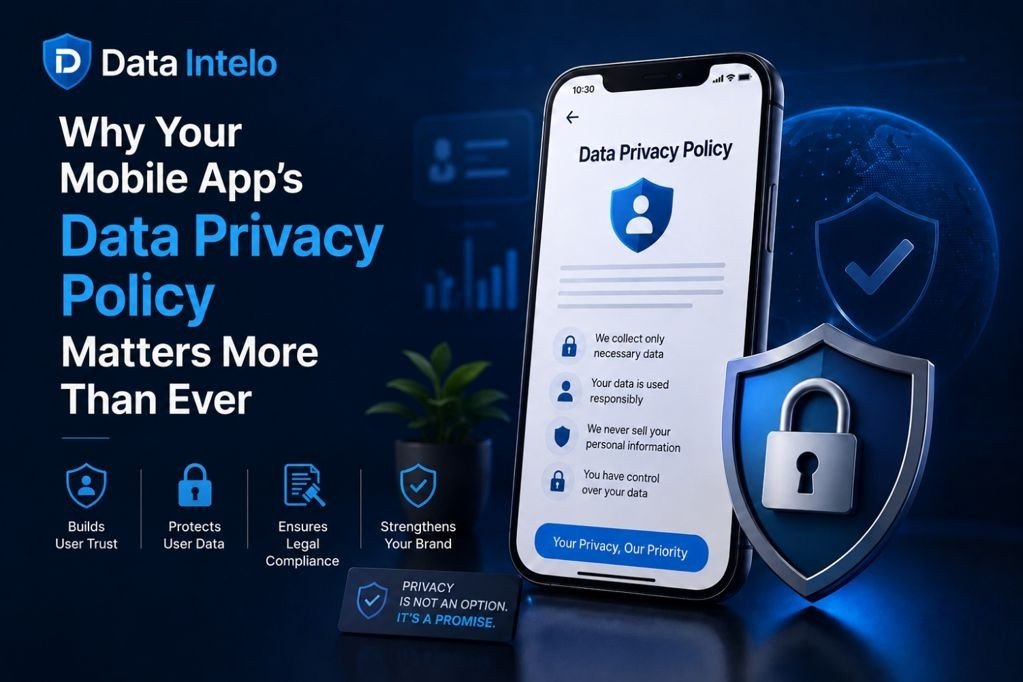
Trust begins with clarity
The first question that comes to mind for many people when using an app is straightforward – what is being done with the information that I am giving you? Unless the user receives a satisfactory response, he or she will probably take a while before installing the app, giving any permissions, or even going forward with its usage. A well-written privacy policy makes it easy to understand this information exchange.
Clearity also helps to decrease friction. Many people don’t read lengthy legal policies, but they tend to check the fundamentals. They want to find out whether the application will use the users’ location, their contacts, payment information, usage statistics, or anything else about their device. Also, they may be interested in knowing who would be able to access this information.
Trust plays a critical role in relation to applications installed on mobile devices since the device itself is personal. In fact, the phone contains messages, pictures, tracking data, payment options, health files, and other credentials. By allowing an application access to such private information, one makes a decision based on his/her trust towards the application.
Privacy is now a business factor
Privacy is still considered by many teams to be a purely legal concern handled by the compliance team. This approach is too limited. Privacy is an important consideration for downloading, retention, App Store ratings, customer service, and brand reputation. It is also relevant when considering whether the user gives the app permission to use sensitive functions.
In a competitive market scenario, privacy issues play a critical role in determining consumer behavior similar to other aspects such as features provided by the product. People will opt for an application that provides clear information about its privacy policy. Privacy issues can thus play an important role in the customer experience.
When it comes to the ability to communicate well regarding privacy policies, it can be said that such a business will be able to grow even further. Inability to handle privacy properly may result in complaints, unfavorable reviews, potential lawsuits, or other issues that can slow down the growth significantly. However, those troubles outweigh the expenses of creating a good policy in the first place.
Regulations demand more specificity
Data protection laws and regulations have also become more stringent over time. The requirement for disclosing what kinds of data are collected, what they will be used for, who they will be shared with, and what user rights they possess have become standard practice for many firms. Location data, analytics data, device ID data, ad ID data, behavioral data, and vendor SDK data.
A generic template cannot suffice most of the time. If the document borrows information that is written in a professional tone but it does not align with the actions performed by the app, it becomes a significant concern. Consumers require accurate information about their applications, and at the same time, regulators are expecting truthfulness from them.
It becomes even more relevant in the case where the application utilizes third-party solutions. Analytics services, payment gateways, ad networks, crash-reporting systems, and other similar third-party tools can impact the flow of personal information within the product. As such, if any of those tools become part of an application, the company’s privacy policy must describe their involvement. Disclosure of third-party processing is one of the key elements of contemporary privacy communication.
Users expect direct answers
The point is not what a regular consumer should be able to understand about the legalese, but rather what he or she should be aware of. Here is an example of such a question: What sort of personal information do you gather? What for do you need it? Do you share it with third parties? Can I delete it? Whom should I contact? How long do you store my information?
This is not to suggest that the policy be made too casual and too simplistic to be accurate. Accuracy is still a necessity. But precision should not necessarily mean lack of clarity. It should be ensured by using short sentences and proper heading.
It is also important for the policy to be accessible. It can become difficult to find information that cannot easily be located within the app or the website, reducing its utility significantly. Accessible information can also be considered transparent information. The location of the information should not require any searching by the user.
Security and privacy work together
The privacy policy should not be a substitute for security, but it should be a description of the environment created by security controls. For example, when an application is marketed as one which will keep the user’s data safe, it should show up in the development and maintenance of the application itself.
Privacy and security, even though connected, are two distinct terms. Whereas security entails one’s safety from any breach, loss or mishandling of data. On the other hand, privacy covers information collection, processing, distribution, and dissemination. Both are important elements that every organization must consider. The app may be perfectly secured, but at the same time collect a lot of personal information that may violate customers’ privacy rights.
This is the reason internal alignment is essential. It is imperative that all parties involved in the product development process – product team, development team, marketing team, and legal team – have knowledge of what type of information is collected and why. Having everyone on the same page in terms of privacy policies will ensure consistency in future updates.
Data minimization lowers risk
One of the key ideas of privacy is to collect only what you need. The more information your application will store, the more it will have to be protected, disclosed, and controlled. Moreover, the less data is collected, the less the target for attacks and the simpler the product becomes to use.
From a user’s point of view, excessive permission requests can serve as a warning flag. For instance, when the application requests access to contacts, mic, GPS, camera, etc., although none of that is required, the user will most likely not grant permission and leave the application. It makes sense to collect only the data necessary for the service.
Data minimization does not hinder growth; rather, it is a principle that aids better decision making. When companies know what data they need for their projects, they can create more effective products and communicate in a clear manner. This process usually results in trust and prevents future issues.
Reputation depends on consistency
A privacy policy alone will not safeguard one’s reputation; what will do that is when there is a congruence between the stated policy and the application’s real workings. Should there be a mismatch between the two, it would quickly become apparent to the users; thus, causing mistrust very rapidly.
Digital products have very fragile reputations since bad experiences can spread fast on the internet. One negative comment about the vague use of data can affect a lot of potential customers in the future. App store ratings, social media comments, customer complaints, and any criticism from the community are some factors that define the reputation of a digital product.
Such open and transparent privacy communication reduces such risks. Consumers will be more inclined to trust the app once they see that the business is not using ambiguous wording when it comes to the privacy policy. This is especially important in the context of markets with easy entry barriers for competitors.
A good policy matches the product
The best privacy policy is the one that really describes the actual product that users are dealing with. When it is storing account information, making any payment processing, having some analytics, or sharing information with its vendors, it must clearly state all of this. When the application allows users to delete accounts or request access, it also must tell how.
It also implies that the policy needs to be dynamic in nature. The applications keep evolving. There can be changes made in the use of data. With the addition of new features or other third-party applications, privacy risks can change. An outdated policy from six months ago will not work anymore.
It is often underappreciated how quickly ecosystems of apps change. An update of an SDK or a marketing service will have little impact on the product, yet it may influence data gathering significantly. That is why a privacy assessment should become a part of both launch and maintenance.
What a strong policy should cover
Several essential components should be included within a good privacy policy. For instance, it needs to indicate the types of personal data that are being collected. In addition to that, it needs to specify the reason for collecting and using the personal data. Another component involves indicating whether such personal data is shared and with whom. Lastly, it also needs to indicate how long such data will be retained.
The right of the user with respect to his information should be clearly stated by the application. The rights can include the right of access, rectification, erasure, objection to, and withdrawal of consent to the processing of information, respectively.
Other factors to consider include readability. A policy may have all its legal aspects covered, but that does not necessarily mean that it is going to be easy to read for everyone. Well-written content with headings and clear language makes the policy more usable but no less legal.
Why accessibility matters
Privacy communication also faces the challenge of accessibility. There may be a policy in place, but if it is difficult to access from within a few clicks or is placed at the bottom of a page where users may not look, then the privacy communication may fail. The policy must be easily accessible.
Accessibility can also ensure informed decision-making by users. The users should be allowed to access the policy both through the application itself and through the website associated with the product. This should not be difficult for them to do. Proper positioning means that we respect our customers, and we are not scared to be held accountable.
Even more so in terms of the mobile app, because there is limited room on the mobile screens, and navigation has to be easy for users. Easy to locate, navigate, and accessible multiple times – these are signs of the truthfulness of a business in the eyes of the customers.
Common mistakes to avoid
One of the most common mistakes made concerns the usage of privacy policy statements borrowed from another source. While templates might come in handy, they should be tailored according to the data usage practices of the application. Otherwise, it will lead to errors and legal issues.
One such error is that of being vague with statements. Phrases such as “we may gather information,” or “data may be shared when necessary” fail to make anything clear to the user. The policy statement must be explicit about its contents. Mentioning analytics, ads, and third party services will clear things up for sure.
A third error would involve forgetting updates. The privacy policies need to develop together with the application. When the product changes and the privacy policies do not, there will be major trust issues. Review of the policy should become a routine practice within the company.
Privacy promotes sustainable growth
Although it is very easy to enjoy some temporary successes, sustainability needs trust. Those applications that focus on fast growth by disregarding privacy concerns will likely run into trouble like churn, negative reviews, and even deletion from the app stores. Those applications that engage in effective communication and protect their users’ data will succeed.
The question of privacy is especially relevant when entering a new market and/or partnering with someone else. Privacy requirements vary based on the geographical area, and partnerships change the way the information moves within the organization. It is easier to cope with these changes with an established privacy policy.
As far as practicalities go, privacy ensures that the company remains structured. This is because the team will have to ensure that the data that they gather is essential and is managed properly. The process may even help make the product better than it originally was intended to be. Privacy thus means more than just limitations.
Practical Perspective: Building User Trust Through Privacy
One important lesson that I have learned throughout the years is that the users will always trust your mobile application if they know precisely what happens with their data. When you implement any changes in your application – from adding analytical software to implementing financial services such as payments, then you may change the way the user’s private data is being used. If you do not update the privacy statement, however, you risk creating misunderstanding and mistrust.
For teams who do privacy reviews with each significant product update, there tends to be less of an issue staying true to the app’s actions and the promises in the policy. Just simple things such as avoiding collecting data where it’s unnecessary, being clear about the permissions, and making it known if any third parties are involved could go a long way. In today’s app market, privacy isn’t just something that’s in a document; it shows how much a company respects its users.
FAQs
What is a mobile application privacy policy?
Mobile application privacy policy is a statement, which discloses the type of personal data that an application collects from its users, what this data is used for, whether it is provided to third parties and rights of users concerning the data protection.
Why is a privacy policy needed for a mobile app?
This document allows understanding how the company manages personal data of its customers, makes compliance easier and establishes trust with the target audience.
What information needs to be in the policy?
This document must include details about data types, the reason why data is required, information about the data sharing practices, retention time, users’ rights, security measures and privacy contacts.
Where must the policy be posted?
It is recommended to post the policy within the app and website that are associated with it.
How often should the privacy policy be updated?
It must be updated any time the data collection methods of the app undergo any changes.
Final thoughts
A privacy policy is not merely a requirement; it is an outward declaration of the way in which a company conducts itself with regard to handling users’ data. If it is transparent, honest, easily understandable, and consistent with what the app actually does, it serves a valuable purpose in establishing trust. In the context of mobile apps, such trust has real value. It ensures better engagement, retention, compliance, and a stronger brand. In a world where consumers can choose from many options, privacy policies are not just about compliance but also a competitive strength.

Chris Mcdonald has been the lead news writer at complete connection. His passion for helping people in all aspects of online marketing flows through in the expert industry coverage he provides. Chris is also an author of tech blog Area19delegate. He likes spending his time with family, studying martial arts and plucking fat bass guitar strings.