

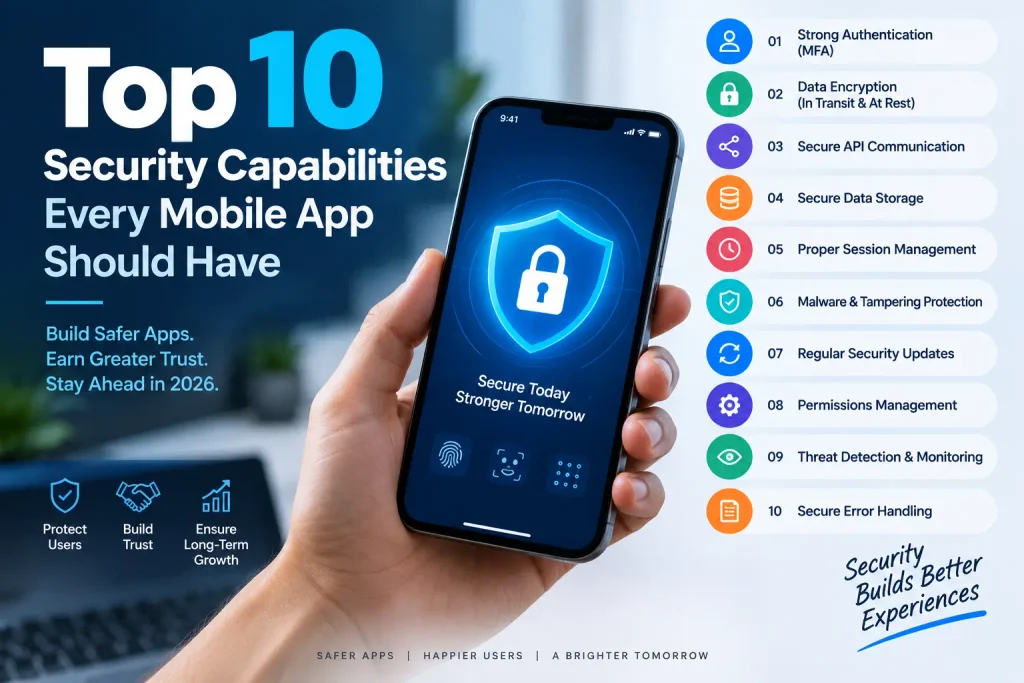
Mobile applications increasingly handle payments, personal information, subscriptions, business processes, and valuable intellectual property. That makes the application a security boundary, not simply a tool for accessing services. Developers need protection that covers the areas attackers can exploit, from exposed code and data to unauthorized changes and hostile runtime activity. For organizations evaluating an alternative to GuardSquare, understanding the security capabilities that matter can make it easier to build a practical protection strategy.
A strong approach is not based on one feature. Different capabilities address different risks, and their value increases when combined. The following ten areas provide a foundation for assessing mobile application security and deciding which protections deserve priority.
1. Code Obfuscation
Application code can reveal algorithms, business rules, workflows, and implementation details when attackers analyze a distributed package. Code obfuscation makes that logic harder to interpret while allowing the application to perform its intended functions. This can raise the effort required to understand proprietary technology and reduce the usefulness of decompiled code.
Developers should focus protection on code that provides value. Obfuscating sensitive classes, methods, and related elements can make reverse engineering more difficult and help protect intellectual property after the application reaches user devices.
2. Anti-Tampering Protection
A legitimate application can become a security risk if someone modifies its package and redistributes an altered version. Anti-tampering capabilities help identify unauthorized changes to application components and can prevent modified builds from behaving like trusted releases.
This protection is particularly useful for applications with paid features, transaction workflows, or important business rules. Maintaining confidence in the application’s original structure can also help reduce the impact of attempts to bypass restrictions or alter intended behavior.
3. Runtime Threat Detection
An application can face threats after installation, when attackers interact directly with its running processes. Runtime threat detection helps identify suspicious conditions or activities while the application is operating, adding protection beyond measures applied during the build.
This capability can be valuable when attackers attempt to manipulate application behavior, inspect processes, or operate in environments that create additional risk. Runtime awareness allows security controls to respond to conditions that static protection alone may not address.
4. Anti-Debugging Controls
Debugging tools can help attackers observe application behavior, inspect processes, and understand how specific functions operate. Anti-debugging controls are designed to make unauthorized debugging more difficult, particularly when an attacker is trying to study protected application behavior.
Adding this capability can create another obstacle during analysis. It becomes especially relevant for applications containing proprietary workflows or security-sensitive operations where detailed runtime observation could reveal information useful for bypass attempts.
5. Integrity Protection
Application integrity focuses on confirming that protected components remain in their expected state. Unauthorized changes to binaries, resources, or other application elements can affect security and functionality, making integrity an important part of a defense strategy.
Developers can use integrity protection to strengthen confidence in released applications and identify unexpected modifications. Combined with other security layers, it can make it harder for attackers to turn an authentic application into a manipulated version.
6. Data Encryption
Mobile applications may process credentials, personal details, tokens, financial information, or proprietary data. Encryption helps protect sensitive information so that access to stored or transmitted data does not automatically make it readable to an unauthorized party.
The implementation should reflect the type and location of the data being protected. Developers should consider information handled by the application, communication channels, and cryptographic material. Strong encryption practices can reduce the consequences of unauthorized data access.
7. White Box Cryptography
Cryptographic operations can become attractive targets when attackers attempt to recover or misuse sensitive keys from an application. White box cryptography is designed to protect cryptographic implementations and make key extraction more difficult even when code executes in an environment controlled by the user.
This capability can be relevant to applications that depend heavily on cryptographic functions for valuable transactions, content, or authentication-related processes. It adds specialized protection where conventional encryption alone may not address the challenges of exposed client-side execution.
8. Jailbreak and Root Detection
Compromised devices can provide attackers with greater control over the environment in which an application runs. Jailbreak and root detection can help identify devices where normal platform security boundaries have been weakened, allowing an application to apply responses based on its risk requirements.
Such detection is useful for applications where the device environment directly affects security. It gives developers another signal for identifying elevated risk and can complement runtime controls designed to protect application behavior.
9. Threat Analytics
Security protection becomes more useful when developers and security teams can understand the threats affecting their applications. Threat analytics can provide information about detected activity, patterns, and application security events, helping teams gain a clearer view of their security environment.
This visibility can support better decisions about future protection. Instead of relying only on assumptions, organizations can use security information to identify recurring risks, prioritize improvements, and understand how application defenses are performing after release.
10. Secure Development Integration
Mobile security should fit into the way developers build, test, and release applications. Integration with existing development pipelines can make protection easier to apply consistently, reducing the need for disconnected manual processes during every release.
A practical security platform should work with the tools and environments used by development teams. SDK-based integration, build automation, and compatibility with established workflows can help organizations introduce protection without unnecessarily disrupting application delivery.
Conclusion
Every mobile application has different risks, but strong protection should address more than a single attack method. Code protection, tamper resistance, runtime awareness, data security, device-risk detection, analytics, and development integration can work together to create a security foundation. Evaluating these capabilities according to application needs helps developers prioritize meaningful protection.
For those seeking comprehensive mobile application security, Doverunner provides protection for Android and iOS applications through capabilities such as code obfuscation, anti-tampering, anti-debugging, RASP, integrity protection, jailbreak and root detection, data encryption, white box cryptography, and threat analytics. Its broad security approach helps organizations protect valuable application assets while supporting stronger defenses across development and runtime environments.

Chris Mcdonald has been the lead news writer at complete connection. His passion for helping people in all aspects of online marketing flows through in the expert industry coverage he provides. Chris is also an author of tech blog Area19delegate. He likes spending his time with family, studying martial arts and plucking fat bass guitar strings.