

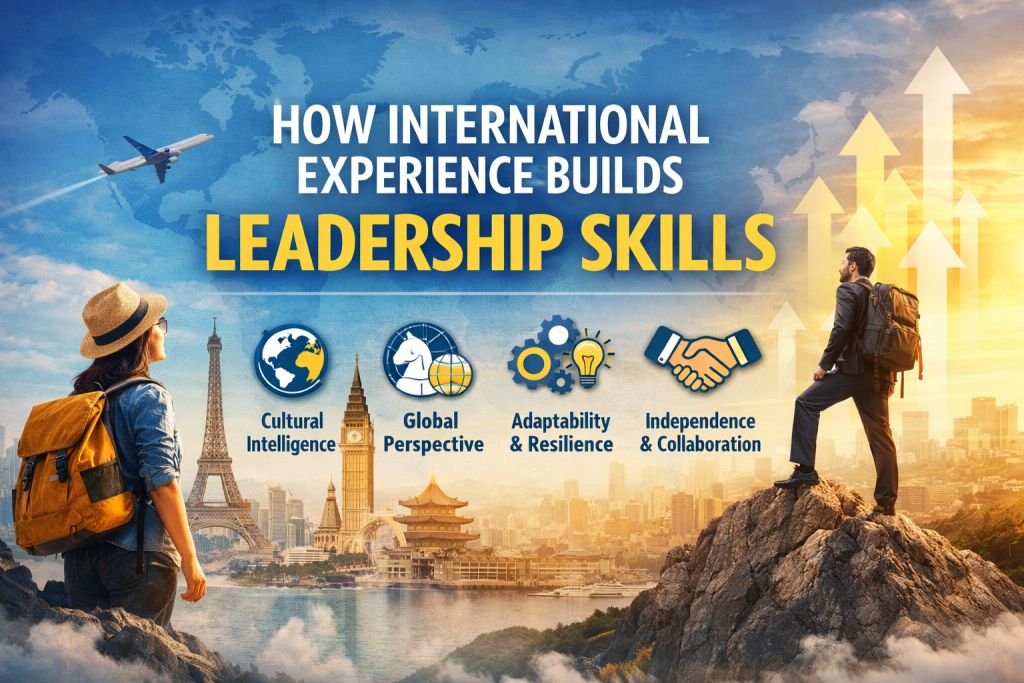
Living, studying, or working overseas is more challenging than it sounds. The entire experience just pulls you out of autopilot. Suddenly, you aren’t in a familiar place anymore. All these new experiences urge you to start noticing how you communicate or react under pressure. That awareness alone is enough to change you. And that shift that happens internally lays the groundwork for strong, grounded leadership.
Cultivating Cultural Intelligence
Cultural intelligence is a vital aspect of leadership. It’s your ability to work well with people who think and behave differently from you. And with diverse team structures in almost all fields and departments, this skill determines how well you integrate into your team.
When you spend real time overseas, you become more aware of common patterns. You eventually notice that some people value direct communication. You also learn that some topics need to be wrapped in softer language. If you miss that, projects stall. If you learn it, you move forward smoothly.
Global Perspective and Strategy
Spending time in another country changes how you see the world and the people around you. News stories become personal. Economic shifts are no longer abstract. You have friends in those regions. You understand how policies affect everyday life there. This newfound perspective has a big impact on your strategic thinking, urging you to consider the long-term implications of your decisions more carefully.
If you’re motivated to learn, looking into gap year volunteer programs will help you get there. Supporting community projects in underdeveloped nations allows you to observe the intersection of local leadership, education, and infrastructure directly. Years later, you take those realities into account while making business decisions, considering impact in addition to profit. Only a good and experienced leader can do that.
Understanding and Leveraging Cultural Differences
It’s good to be able to notice differences. But it’s also important to learn how to use them wisely. International experience is of great importance here because it teaches you that difference is not a problem to fix. It’s rather a resource you can leverage.
When your team faces challenging problems, some individuals may tackle them systematically, while others may adopt a more imaginative, overarching perspective. If your experience has been restricted to a single cultural context, you may lean towards one method and disregard the others. However, this is a narrow viewpoint. If you’ve had the opportunity to live in another country, you may have noticed that different methods can achieve success in different environments.
Adaptability and Resilience
Moving abroad is not always smooth and pleasant. Something has to happen, even if you plan in advance. You either get lost, drown in paperwork, or the adaptation period drains the life out of you. It happens to the best of us. And at first, it feels exhausting, and you might even end up questioning your decision.
But that is what happens when you take a big step. It takes time to regain your balance. Eventually, you learn how to navigate this chapter of your life. Leaders need this adaptability because everything changes, from markets to teams and clients. International experience is like training for that uncertainty. When you’ve dealt with language barriers, different workplace norms, and unfamiliar social cues, you become less rattled by change.
Growing Independence, Collaboration, and Confidence
You’ll quickly see that international experience can be paradoxical. It makes you more independent and more collaborative at the same time. On one hand, you learn to rely on yourself. You open bank accounts in foreign systems. You navigate transport networks you have never seen before. You build a new routine from scratch. That independence strengthens your confidence. You start to think, “If I’ve managed to handle that, I can handle this.”
On the other hand, you experience something humbling by realising that you can’t do everything alone. You can’t just move to another country and be Miss Independent. You need local friends to help you keep your sanity in check and also to explain cultural norms. You also need colleagues to clarify expectations, as well as good mentors who understand the environment better than you do. So you ask for help. You listen. You work as part of a team, and you learn that we’re not really meant to be lone heroes.
Final Thoughts: Growth Happens When Determination Aligns With Circumstances
Just because you have international experience doesn’t mean you’ll automatically be a good leader. But if you’re looking for something that creates conditions where leadership skills can grow more naturally, you’re on the right path. When your determination joins forces with the circumstances, growth stops being theoretical and starts becoming personal.

Chris Mcdonald has been the lead news writer at complete connection. His passion for helping people in all aspects of online marketing flows through in the expert industry coverage he provides. Chris is also an author of tech blog Area19delegate. He likes spending his time with family, studying martial arts and plucking fat bass guitar strings.