
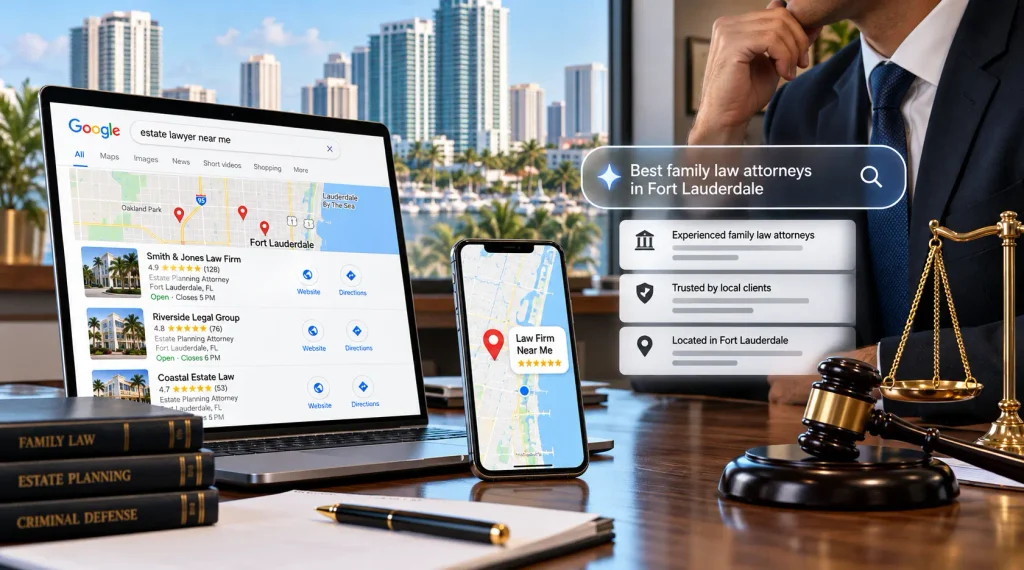
Not every search is worth the same to a law firm. Someone typing “what is probate” is curious. Someone typing “estate lawyer near me open now” is ready to hire. Local SEO is how you get in front of that second person. It’s the work that helps your firm show up in Google’s map results, local organic listings, and now AI answers when people search for a lawyer in their area. For law firms, a single new client can be worth thousands of dollars in fees. That’s why the competition is so tough online, and why guessing doesn’t work. You need a plan that targets the searches that bring real cases, not just clicks.
This article explains how local SEO works for law firms, which searches matter most, and what to fix first. It’s practical and based on what’s working right now, not on tricks that stopped working years ago.
What Makes a Search High-Value
A high-value search has two things: local intent and hiring intent. The person needs a lawyer, and they need one nearby.
Compare these:
- “how does joint custody work” (research, low intent)
- “custody lawyer Fort Lauderdale” (local, high intent)
- “emergency custody attorney near me” (local, urgent, very high intent)
The first one might bring traffic. The last two bring phone calls.
For example, someone searching for family law attorneys in fort lauderdale after being served papers is close to hiring. They’re comparing a few firms, reading reviews, and calling within a day or two. That’s the search you want to win.
So before doing any SEO work, list the searches that lead to signed cases. Ask your intake team what people say when they call. Look at which practice areas bring the most revenue. Then focus there first.
How Google Ranks Local Results
Google says local results are based on three main factors:
- Relevance: how well your listing and site match what the person searched
- Distance: how close your office is to the searcher or the location in the search
- Prominence: how well known and trusted your firm is, based on reviews, links, mentions, and overall web presence
You can’t change distance much. But you can work on relevance and prominence. That’s where local SEO comes in.
One thing to understand: the map results (the “local pack”) and the regular organic results are related but different. Your Google Business Profile drives the map. Your website drives organic. You need both.
Pick Keywords by Practice Area and Place
Law firm keywords usually follow a simple pattern: practice area plus location, or practice area plus “near me.”
Build a list like this for each practice area:
- [Practice] lawyer [city]
- [Practice] attorney [city]
- [Practice] lawyer near me
- Specific case types, like “DUI lawyer,” “slip and fall attorney,” or “contested divorce lawyer”
- Nearby cities and neighborhoods you actually serve
Then sort them by intent. Urgent searches like “arrested,” “emergency,” or “open now” often bring the best clients, especially for criminal defense and family law.
Don’t chase huge keywords you can’t win yet. A newer firm may struggle to rank for “lawyer Miami.” But “estate planning attorney Plantation” might be very winnable and still bring good cases.
Set Up Your Google Business Profile Properly
Your Google Business Profile is often the first thing people see. For “near me” searches, it may be the only thing they see.
Key steps:
- Use your real firm name. Don’t stuff keywords into it, like “Smith Law – Best Divorce Lawyer Fort Lauderdale.” Google can suspend profiles for that.
- Choose specific categories. “Criminal Justice Attorney” or “Estate Planning Attorney” beats plain “Lawyer.”
- One profile per real office. Virtual offices and shared mailboxes usually get flagged.
- List your services. Add each practice area with a short description.
- Add real photos. Office, team, signage. Stock photos don’t help.
- Post updates. Short posts about firm news, legal updates, or community events keep the profile active.
- Check it often. Anyone can suggest edits to your profile, including competitors. Review changes so wrong info doesn’t stick.
Some firms also create profiles for individual attorneys. That can work, but it can also split your reviews. Think it through before you do it.
Build Practice Area and Location Pages That Earn Their Place
Your website needs a strong page for each main practice area. Each page should explain the service, answer common questions, and show why your firm is qualified to handle it.
If you serve several cities, location pages can help. But be careful. Google doesn’t like “doorway pages,” which are near-identical pages with only the city name swapped. Those can hurt more than help.
A good location page includes:
- Real details about serving that area, like which courthouse handles cases there
- Directions, parking info, or nearby landmarks if you have an office there
- Local case examples (within Bar rules)
- Attorneys who actually handle cases in that area
- Answers to questions specific to that county or city
If you can’t write something unique and useful for a location, you probably don’t need a page for it.
Get Listed in the Right Legal Directories
Citations are mentions of your firm’s name, address, and phone number on other sites. They help Google confirm your firm is real and where it’s located.
For law firms, the most useful ones include:
- Avvo
- Justia
- FindLaw
- Martindale-Hubbell
- Super Lawyers (if you qualify)
- The Florida Bar member directory
- Local chamber of commerce
- Local and county bar associations
Your details must match everywhere. Same firm name, same address format, same phone number. If you moved offices or changed numbers, go back and fix old listings. Outdated info confuses both search engines and AI tools.
Reviews Drive Rankings and Clicks
Reviews affect where you rank and whether people click. A firm with 150 recent reviews usually beats a firm with 12 old ones, even if the second firm has better lawyers.
What matters:
- Volume: more reviews over time
- Recency: a steady flow, not a burst from three years ago
- Rating: strong average, but a few honest lower reviews look normal
- Content: reviews that naturally mention the service, like “helped with my DUI case”
Build a simple routine. Ask at the end of every case. Send a direct review link by text or email. Make it quick.
Reply to reviews, but protect confidentiality. Never confirm someone was a client or mention case details in your reply. And follow Florida Bar rules on testimonials if you reuse reviews on your site or in ads.
Earn Local Links That Matter
Links from other websites still matter for prominence. For local SEO, links from local and legal sources count more than random links from unrelated sites.
Good options:
- Sponsoring local events, youth sports, or charities
- Speaking at community groups or CLE events
- Writing guest articles for local business publications
- Getting quoted in local news on legal topics
- Membership pages for local bar associations and legal groups
- Partnerships with related professionals, like financial planners or therapists who refer clients
Skip paid link packages and link farms. They rarely help now, and they can get your site penalized.
Fix the Technical Basics
A slow or broken site drags everything else down. Check these:
- Mobile: most legal searches happen on phones. The site must work well on small screens.
- Speed: pages should load fast. Compress images and remove plugins you don’t use.
- Click-to-call: your phone number should be tappable on every page.
- HTTPS: your site must be secure.
- Schema markup: add LegalService or Attorney schema with your name, address, phone, hours, and practice areas.
- Clean structure: clear menus, logical URLs, and internal links between related practice pages.
These aren’t exciting, but they make sure Google and AI tools can read your site properly.
Don’t Ignore AI Search
More people now ask ChatGPT, Gemini, or Google’s AI Mode for lawyer recommendations. These tools pull from your website, your Google profile, directory listings, and reviews.
To show up, make sure AI crawlers aren’t blocked on your site. Keep your content clear and factual. Answer common questions directly. And keep your details consistent across the web. AI tools tend to recommend firms they can verify from several sources.
Track What Leads to Cases
Rankings alone don’t tell you much. Track the full path:
- Calls and direction requests from Google Business Profile
- Organic search traffic to practice area pages
- Form fills and calls from the website (use call tracking)
- Consultations booked
- Cases signed, and from which source
Review this every month. If one practice page brings lots of traffic but no calls, fix the page. If one area brings high-value cases, put more effort there.
Common Mistakes to Avoid
- Keyword stuffing your business name
- Copying the same location page for ten cities
- Ignoring negative reviews or replying angrily
- Buying cheap links
- Letting old directory listings show wrong addresses
- Focusing on traffic instead of signed cases
Where to Go From Here
Local SEO isn’t a one-time setup. It’s steady work over months. Start with your Google Business Profile and your top practice area pages. Then build reviews, clean up citations, and earn a few good local links.
If you’re comparing options for law firm marketing fort lauderdale agencies offer, ask how much of their plan goes into local SEO and how they measure success. A good answer talks about signed cases and cost per client, not just rankings. That’s what actually grows a practice.

Chris Mcdonald has been the lead news writer at complete connection. His passion for helping people in all aspects of online marketing flows through in the expert industry coverage he provides. Chris is also an author of tech blog Area19delegate. He likes spending his time with family, studying martial arts and plucking fat bass guitar strings.