
I have spent far too many hours in boardrooms across Singapore where the mood is celebratory because a keyword finally hit Page 1. The agency is happy. The marketing manager is happy. The charts are pointing up and to the right.
But then I look at the revenue sheets. They are flat. Sometimes they are even trending down.
This is the reality that most people find annoying in the industry and want to ignore. There is a massive difference between “ranking” and “revenue.” I see business owners get caught in this vanity trap every single day. They obsess over their position on Google while their actual business growth is nonexistent.
When you have observed SEO ranking and the business is not growing, then you are probably operating on the wrong side of the equation. You are getting the invitation right, and the party is a disaster. Let’s look at why this happens and how you can actually start turning those clicks into cash.
The Common Misunderstanding: “Better Ranking = More Growth.”
The reasoning appears easy enough. The more people visit your site, the more people purchase your product. That would be the case in an ideal world. However, this is not the perfect world. We are living in an age where the search purpose of a consumer is not usually to what the company is actually selling.
A lot of business owners treat SEO like a game of high scores. They think that as long as they are at the top, the money will naturally follow. This is where the misunderstanding starts. Ranking is just visibility. It is a tool. It is not the final goal. If your SEO rankings not increasing traffic or sales is your current reality, it usually means the foundation of your keyword strategy is built on sand.
The Big Reasons Better Rankings Don’t Mean More Business
I have audited hundreds of campaigns. When I see ranking improvements without growth, it almost always boils down to a few specific, avoidable mistakes.
You Rank for the Wrong Keywords
This is the number one killer of SEO ROI. It is very easy for an agency to show you progress by ranking you for “easy” keywords. The problem is that easy keywords are often useless.
Suppose you are a company that is a seller of high end, luxury gaming PCs. You have worked months on your SEO, and you have made it to the first position when it comes to the keyword ” affordable laptops. Theoretically, you have won a huge battle. You are getting thousands of visitors every month.
But there is a problem. The people searching for “affordable laptops” are looking for a deal. They want a basic machine for five hundred dollars. When they land on your site and see a custom liquid cooled rig that costs five thousand dollars, they leave immediately.
You have the ranking. You have the traffic. But you have zero sales because the intent of the searcher doesn’t match the reality of your product. You are talking to the wrong room.
Your Website Doesn’t Convert Visitors
This is the “Click and Quit” phenomenon. Google did its job. It sent the person to your door. But once they stepped inside, they couldn’t find what they needed, or the experience was so bad they lost interest.
I see this all the time with businesses that focus solely on the technical side of SEO but ignore the user experience. If your landing page looks like a wall of text designed for a robot rather than a human, people will bounce. If your “Buy Now” button is hidden or your contact form has twenty fields to fill out, you are killing your own growth. You are paying for the traffic and then throwing it away at the last second.
You Ignore the User’s Real Questions
Modern searchers are smart. They do not desire a product alone, but a solution to a problem. When your page ranks on a given query, yet it does not really fix the pain point that the user has, they will revert to the search results, and will click on your competitor.
As an example, when people go online and type in how to fix a leaky pipe, they’ll open your page. And all they see is an average sales pitch of your plumbing company, but not any information on how to fix it, then they will feel disappointed. You managed to pass the algorithm, but you did not pass the human.
The “Zero-Click” Trap and the Rise of AI Overviews
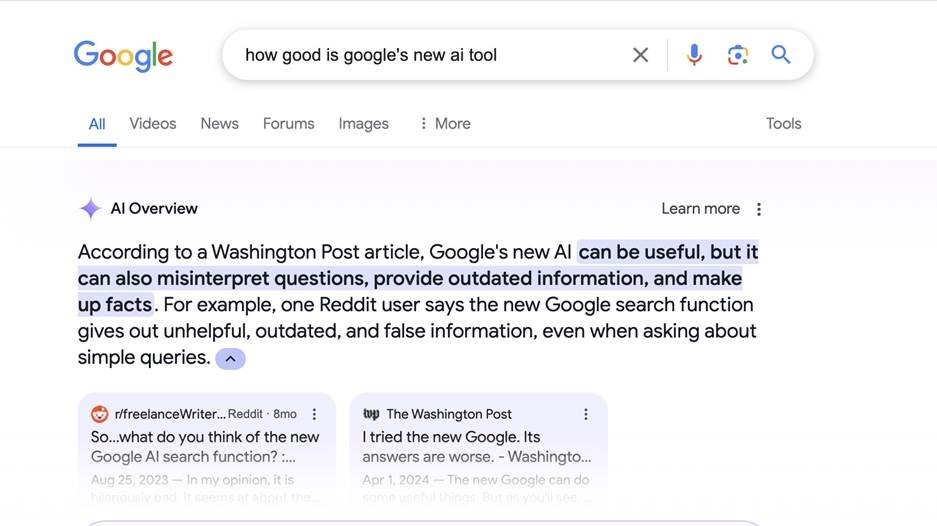
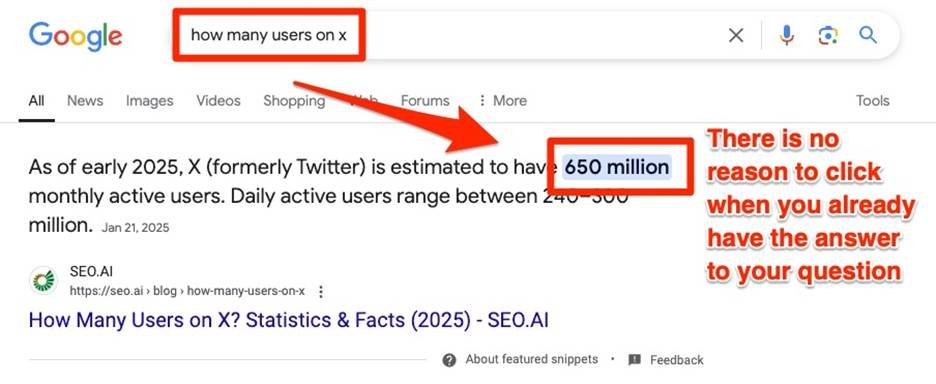
As we navigate the search landscape of 2026, a new hurdle has emerged that explains why your rankings might be climbing while your traffic remains stagnant: the Zero-Click search. With the total integration of AI Overviews and Generative Search, Google has transformed from a librarian into an answer engine.
If you rank number one for a keyword like “average cost of a corporate lawyer in Singapore,” Google’s AI might simply scrape your content and present the answer directly on the search results page. The user gets exactly what they need without ever clicking your link. You technically “won” the ranking battle, but you lost the visitor.
Transitioning from Information to Action
This is a complex problem that requires a shift in content strategy. If your ranking pages are purely informational and don’t provide a unique perspective, a proprietary tool, or a reason to “see more,” you are essentially providing free labor for Google’s AI. To turn these rankings into growth, your content needs to offer something the AI can’t summarize, like a personalized calculator, a downloadable case study, or an expert opinion that requires deeper engagement. When you work with a specialized SEO Service in Singapore, they can help you pivot your strategy away from “summary-style” content toward “destination-style” content that forces a click.
The Hidden Technical and Experience Issues
Sometimes the rankings are perfect, and the keywords are right, but the technical debt of the website is quietly sabotaging the results.
Slow Website Speed on the Winning Page
When you rank highly, your traffic increases. This is a stress test for your server. If that specific page that is now ranking takes five seconds to load on a mobile device, your visitors are gone before they even see your headline.
Speed is a conversion killer. People in Singapore are notoriously impatient when it comes to web performance. If you aren’t working with a professional SEO Service in Singapore like Awebstar, you might miss these micro technical issues that prevent growth. A good partner doesn’t just look at the ranking; they look at the infrastructure supporting that ranking.
Bad Mobile Experience for the New Traffic
It is quite possible that more than half of your search traffic flows into your phone. When your site appears fine on your office desktop and a message on your iPhone, then you are wasting your ranks. Minuscule mobile buttons, text overlaps and lagging load times are the silent murders of conversion.
Confusing Next Steps After They Read Your Content
I call this the “Dead End” page. You rank for a great article, the user reads the whole thing, and then they reach the bottom of the page. There is nothing there. No suggestion for a related product. No clear “Book a Consultation” button. No newsletter signup.
You gave them the information for free and then let them walk away without a clear path forward. Every ranking page should be a step in a journey, not a destination.
Competitive Reality Checks
Sometimes the lack of growth isn’t about what you are doing wrong. It is about what the market is doing right.
You Rank Number 5 But Everyone Clicks Number 1, 2, and 3
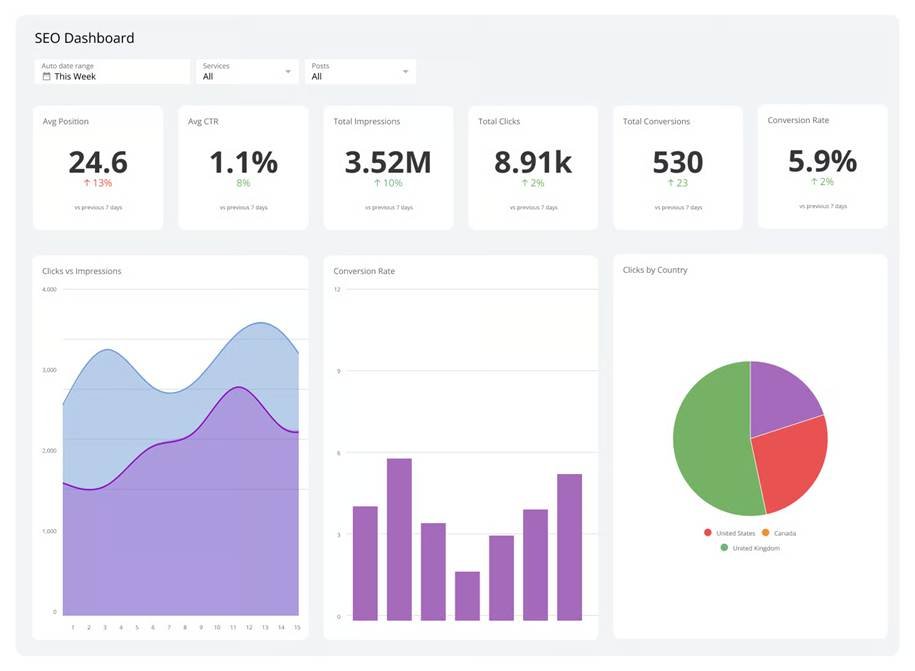
The drop off in click through rates on Google is brutal. The difference between being at the top and being in the middle of the first page is night and day. When you are in the fifth or sixth position, there is a possibility that you will receive a report that you are improving in rank. Though the actual volume of traffic being directed to your site is an insignificant amount compared to the one being directed to the leaders. You are there in the room, and yet you stand at the corner, where nobody can hear you.
Your Competitors Simply Have a Better Offer
SEO can bring a horse to water, but it can’t make it drink. If your competitor ranks right next to you but offers free shipping, a better warranty, and lower prices, the user is going to pick them every single time.
A lot of business owners want to blame their SEO for poor sales when the reality is that their actual business offer isn’t competitive. You cannot use SEO to hide a bad product or a poor value proposition.
How to Make Your Rankings Actually Pay Off
If you are tired of seeing numbers go up without the bank balance following, you need to shift your focus.
Optimize Your Page to Guide Visitors to Act
Every page that ranks needs a job. Is it the job to get an email address? Is it to sell a specific item? After you have determined the job and designed the page to fulfil it. Have clear headings, great calls to action, and eliminate distractions that may tempt the user to go off course.
Track the Right Metrics
Stop looking at where you sit on Google as your primary metric for success. Instead, look at:
- Conversion Rate per Page
- Average Order Value
- Bounce Rate
When you work with a top tier SEO Service Singapore provider like Awebstar, these are the metrics they will emphasize. They understand that their job isn’t just to make you “findable.” Their job is to help you grow.
The Authority Gap: Ranking High But Lacking Trust
You can be at the top of the page, but if you don’t look the part, the searcher will skip right over you. This is what I call the Authority Gap. Searchers in 2026 are more skeptical than ever. They don’t just look at who is first; they look at who is “real.” If your website ranks #1 but your brand has no social proof, no visible reviews, and no “Experience, Expertise, Authoritativeness, and Trustworthiness” (E-E-A-T) signals, the user will instinctively scroll down to a name they recognize.
Ranking is the digital equivalent of standing on a stage. If you get on stage but have no presence, no one listens. Many businesses spend 90% of their budget on the “climb” to Page 1 and 0% on making themselves look like a market leader once they get there.
Building Trust Beyond the Algorithm
Growth happens when the user feels safe enough to give you their credit card details or their email address. This requires more than just keywords; it requires Social Proof Integration. This includes:
- Video Testimonials: Real humans talking about real results.
- Industry Accreditations: Displaying logos that verify your legitimacy in the Singapore market.
- Case Studies with Data: Not just “we did a good job,” but “we achieved X for Client Y using Z.”
If you rank high but your site looks like it was built in 2015, you are creating a “Trust Deficit.” They don’t just optimize for a robot; they optimize for the psychological triggers that make a Singaporean consumer choose one brand over another. Without closing the Authority Gap, your #1 ranking is just a high-visibility reminder that your competitors might be more trustworthy.
Wrap up: Ranking is a Tool, Not the Goal
Search engine optimization is a business venture at the end of the day. It must bear a reward like any other investment. When you were running after rankings because you were running after rankings, then it is time to stop.
It is time to begin to think of your site as a sales funnel, but not a digital brochure. Make sure you are addressing the right people: concentrate on user intent, work on your technical friction and fix it. Ranking is just the beginning of the conversation. What you say after that is what determines whether your business actually grows.
How does your current conversion rate look compared to your ranking growth? Are you ready to dig into the actual data, or should we look at how to refine your keyword intent first?

Chris Mcdonald has been the lead news writer at complete connection. His passion for helping people in all aspects of online marketing flows through in the expert industry coverage he provides. Chris is also an author of tech blog Area19delegate. He likes spending his time with family, studying martial arts and plucking fat bass guitar strings.